Tai O is the opposite of Victoria Harbour. Instead of glass towers and neon, you get wooden stilt houses over tidal channels, drying racks of salted fish, and a fishing village that still smells of shrimp paste. For photographers who want a Hong Kong day that feels completely different from Central or Mong Kok, this is one of the best half-days you can take.
We're UrbanHKG, a small team of Hong Kong photographers. Our main instructor, Carlos, has been shooting this city for more than 8 years. This guide covers how to get to Tai O, what to photograph, and a simple half-day route. For classic skyline spots, see our best photography spots in Hong Kong guide. For seasonal light, read best time to photograph Hong Kong.
Why November and December are ideal for Tai O
Hong Kong's cooler months are when Tai O is most pleasant to walk. Hong Kong Observatory normals (1991–2020) put November around 24.5°C by day and December around 20.4°C, with only about 39 mm and 29 mm of rain. The light is cleaner, and you can spend hours on the boardwalks without summer heat.
Weekdays are quieter than weekends. Arrive mid-morning and leave before late-afternoon bus queues. Sunset in early December is around 5:40pm, so for warm side light on the stilt houses, be on the western channels by mid-afternoon.
How to get to Tai O
Tai O sits on the far west of Lantau Island. There is no direct ferry from Central into the village centre for most visitors; the reliable tourist route is:
- MTR to Tung Chung (Airport Express or Tung Chung Line).
- Bus 11 from Tung Chung to Tai O (about 45–50 minutes). The last stop drops you near the west end of the village. The Hong Kong Tourism Board notes the last bus from Tai O around 12:15am.
- Optional scenic combo: Ngong Ping 360 cable car from Tung Chung to Ngong Ping, then Bus 21 to Tai O (about 20 minutes). Adds the Big Buddha before the village.
Alternative: Central Ferry Pier 6 to Mui Wo (Sun Ferry, roughly 35–40 minutes fast / 50–55 minutes ordinary), then Bus 1 to Tai O (about 45 minutes).
Bring an Octopus card. Exact fares change; check the boards or apps on the day.
What to photograph in Tai O
Stilt houses and tidal channels
The stilt houses (pang uk) over the estuary are why most people bring a camera. Walk the elevated boardwalks and look for reflections of painted walls at high tide, poles and drying racks at mid-tide, and mudflats or boat hulls at low tide.
Our tip: move slowly. The best frames are often between houses, not from the busiest bridge. Ask before photographing people on their doorsteps.
Tai Chung Bridge and Sun Ki Bridge
The bridges give you elevated views along the channels. Use them for wider establishing shots, then drop back to street level for details. Afternoon light from the west often hits the houses cleanly from these angles.
Market streets and dried seafood
Wing On Street and the lanes near the bus terminus are lined with dried fish, shrimp paste and snack stalls. Texture close-ups work well on a phone. Ask before a portrait, and buy something if you linger.
Looking up a Hong Kong street: tram tracks in the foreground, a white pedestrian footbridge, and dense older apartment blocks beside glass towers.
Tai O Heritage Hotel (former police station)
The 1902 colonial police station, now a boutique hotel, sits above the village. Even if you don't stay, the exterior and the view over the roofs make a quieter architectural frame.
Phone and camera tips for Tai O
On a phone
- Expose for the bright walls. Tap the brightest stilt house or the sky reflection, then lower exposure so colours don't blow out.
- Use portrait mode sparingly for a person against the channel; for architecture, stick to the main camera so edges stay sharp.
- Wipe salt spray off the lens if you've been near the water.
- Shoot a short burst when boats move through the channel.
On a camera
- A short telephoto (70–200mm or a phone crop) helps isolate houses across the channel without standing in someone's doorway.
- Aperture around f/5.6–f/8 keeps poles and reflections sharp across a boardwalk scene.
- Watch white balance — painted wood, blue sky and muddy water pull in different directions. Shoot RAW if you can.
- Tripods are usually unnecessary in daylight. Keep the path clear for residents and visitors.
Drones: large parts of Lantau have restrictions. Do not assume you can fly over the village. For legal open-field flying with us, see our drone photography class.
A half-day Tai O photo route
| Time | Where | What to shoot |
|---|---|---|
| Arrive ~10:30am | Bus terminus / Wing On Street | Market textures, dried seafood, first channel views |
| Late morning | Boardwalks and stilt houses | Reflections, poles, laundry, quiet alleys |
| Midday | Bridges and channel viewpoints | Elevated views along the estuary, boat traffic |
| Early afternoon | Heritage Hotel area + western channels | Architecture, warmer side light on house fronts |
| Depart ~2:30–3:30pm | Bus 11 back to Tung Chung | Optional: stop at Ngong Ping on another day if you skipped it |
Allow about four hours in the village, plus travel from Tung Chung. Pairing Ngong Ping and Tai O in one day is popular but rushed for photography — give Tai O its own half-day if photos are the priority.
For a city-only day on Hong Kong Island and Kowloon, use our one-day Hong Kong photography itinerary.
Etiquette and practical notes
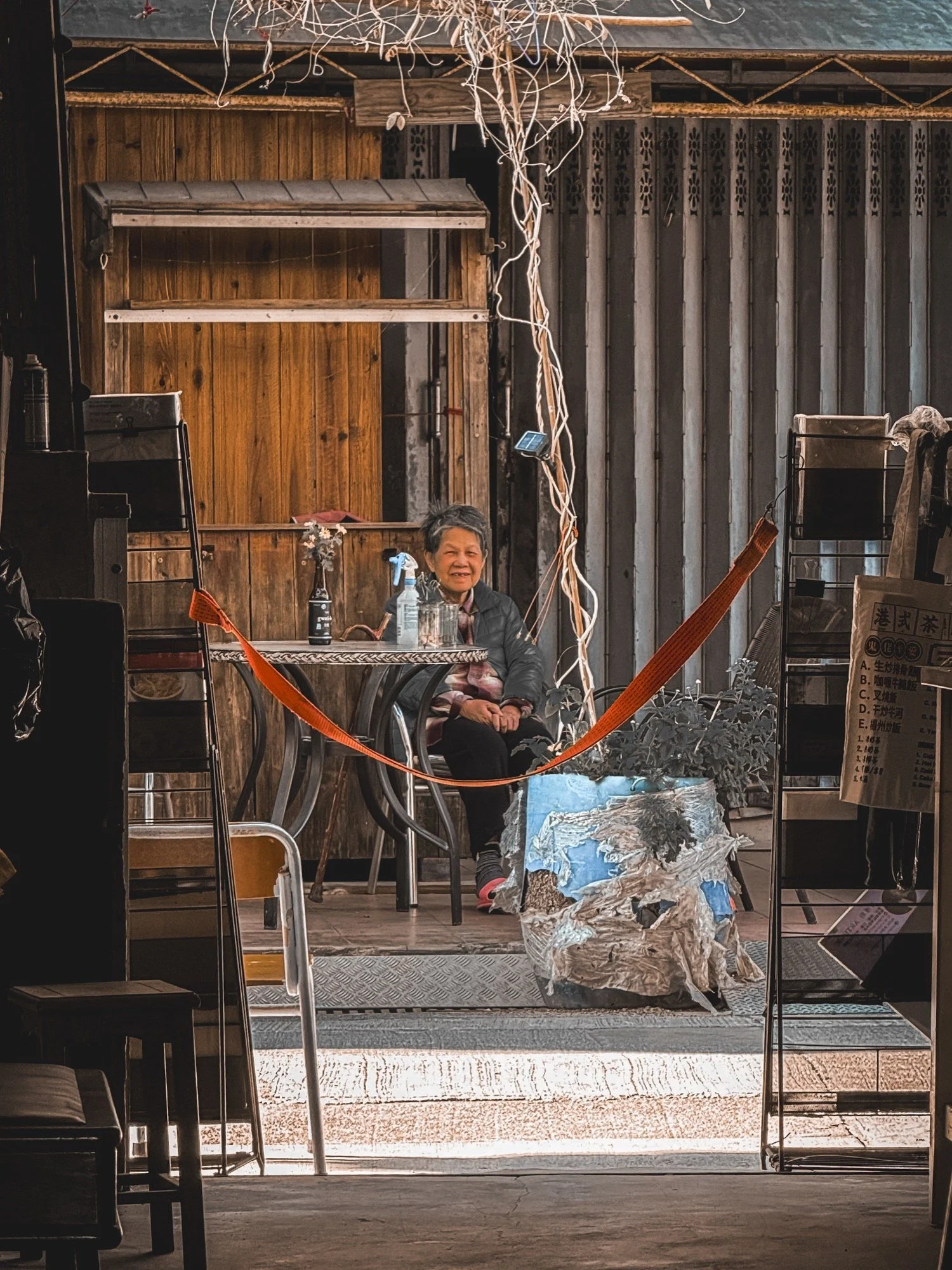
- Residents live here. Keep voices down on the boardwalks, don't step onto private platforms, and ask before close portraits.
- Sunday crowds are heavier. Weekdays photograph better.
- Shoes with grip help on damp boardwalks.
- Cash / Octopus for snacks; many small stalls are not card-only.
- Weather: December is usually dry, but check the Hong Kong Observatory app. If a tour or workshop day turns bad, UrbanHKG offers free cancellation for rain or bad weather.
Photograph Hong Kong with a local
Want someone who knows where to stand, what settings to use and how to shoot respectfully?
- VIP Explorer: our private 4-hour photography tour, any day of the week, with hotel pick-up. HK$2,800; a partner can join for HK$1,000.
- Global Explorer: our small-group tour (3–6 people) at HK$650 per person.
- Foundations of Photography: our 3-hour beginner workshop on Sunday mornings (typically 8am–11am). HK$800. Any camera is welcome, including phones.
We teach in English, German, Portuguese and Italian. Book or ask questions on WhatsApp: +852 9459 5079.
Frequently asked questions
How do I get to Tai O from Central? Take the MTR to Tung Chung, then Bus 11 to Tai O (about 45–50 minutes). Or take the ferry from Central Pier 6 to Mui Wo and Bus 1 to Tai O.
How long do I need in Tai O for photography? Plan about four hours in the village, plus travel time from Tung Chung. That covers the stilt houses, bridges and market streets without rushing.
Is Tai O good for phone photography? Yes. The colours of the stilt houses, reflections and market textures work well on a phone. Lower the exposure on bright walls and wipe the lens if you're near the water.
When is the best time of year to photograph Tai O? October through April is the most comfortable for walking. November and December are especially clear and cool, with lower rainfall than summer.