Best Photography Spots in Hong Kong: A Photographer’s Guide
Hong Kong is one of the most rewarding cities in the world to photograph. In a single day you can shoot a skyline that looks unreal, trams that have rattled along the same streets for over a century, and housing estates so dense they feel like abstract art. The hard part isn't finding something to shoot. It's knowing where to stand.
We're UrbanHKG, a small team of photographers based in Hong Kong. Our main instructor, Carlos, has been shooting for more than 8 years. These are the spots we keep going back to, with practical tips on getting there, when to go and how to shoot them respectfully.
The classic skyline views
Victoria Peak: Lion's Pavilion and Lugard Road
If you only photograph one view of Hong Kong, make it this one. From the Peak you look down over the towers of Central and across Victoria Harbour to Kowloon.
- Getting there: the Peak Tram's lower terminus is on Garden Road in Central, a short walk from Central MTR station. Buses and taxis also go up.
- Free viewpoints: the Lion's Pavilion View Point on Findlay Road is a few minutes' walk from the Peak Tram and Peak Galleria. It's a great frame for the classic skyline shot. Lugard Road, a flat, circular walking path of about 3.6 km, gives you a slightly different and often quieter angle over the harbour.
- Paid option: Sky Terrace 428 at the Peak Tower is the highest viewing platform in Hong Kong. Check the official Peak website for current tickets and opening hours.
- Our tip: arrive well before sunset and stay for blue hour, when the city lights come on but there's still colour in the sky. Bring a jacket on cooler evenings; it's windier up there than in town.
Tsim Sha Tsui Promenade and the Avenue of Stars
The view from Kowloon looking back at Hong Kong Island is the other half of the classic skyline. The waterfront outside the Hong Kong Cultural Centre and along the Avenue of Stars gives you an uninterrupted line of towers with the Peak behind them.
- Getting there: MTR to Tsim Sha Tsui or East Tsim Sha Tsui station, then follow the signs to the waterfront.
- Our tip: include something in the foreground (the Star Ferry, a passing junk boat or the promenade railings) so your skyline shot doesn't look like every other one.
The Star Ferry
The Star Ferry between Central and Tsim Sha Tsui is one of the best-value photo experiences in the city. The crossing takes about 9 minutes, and you get low, close views of both skylines from the water. Sit on the open side, shoot the other ferries, and watch for the moment the boat lines up with the towers.
Street photography on Hong Kong Island
Central and Sheung Wan: trams, slopes and old streets
Central is where Hong Kong's glass towers meet its oldest street patterns. A few things we love:
- The trams. Hong Kong's double-decker trams are a gift to street photographers. Find a footbridge over Des Voeux Road and shoot down as they pass, or ride the top deck and photograph the street through the window.
- The Central–Mid-Levels Escalator. This long chain of covered outdoor escalators climbs the hillside through narrow streets full of signs, stairs and cafés. It runs downhill in the early morning and uphill from around 10am, so plan your walk around it.
- Old streets and slopes. The stepped lanes around the escalator and towards Sheung Wan are full of layers: hand-painted signs, laundry, shopfronts, and light bouncing between buildings.
These streets are exactly the kind of place we shoot on our Hong Kong street photography tour.
Quarry Bay: the "Monster Building"
The so-called Monster Building is a group of five connected residential blocks on King's Road in Quarry Bay, so densely packed that looking up from the courtyard feels like looking out of a canyon. It's one of the most photographed spots in Hong Kong.
- Getting there: MTR Island Line to Quarry Bay, Exit A, then a short walk along King's Road.
- Please remember: these are people's homes. Signs ask visitors to respect residents. Keep your voice down, don't block paths or shopfronts, don't photograph into windows, and skip tripods and drones. A quick, quiet visit gets the shot, and it helps keep the courtyard open to visitors.
Kennedy Town waterfront
Our home neighbourhood, at the western end of the Island Line. The waterfront faces west, so it's one of the best places on the Island for sunsets over the water, with the old harbourfront, fishermen and dog walkers adding life to the frame. It's a relaxed, local alternative to the busier viewpoints.
Neon, markets and density in Kowloon
Mong Kok
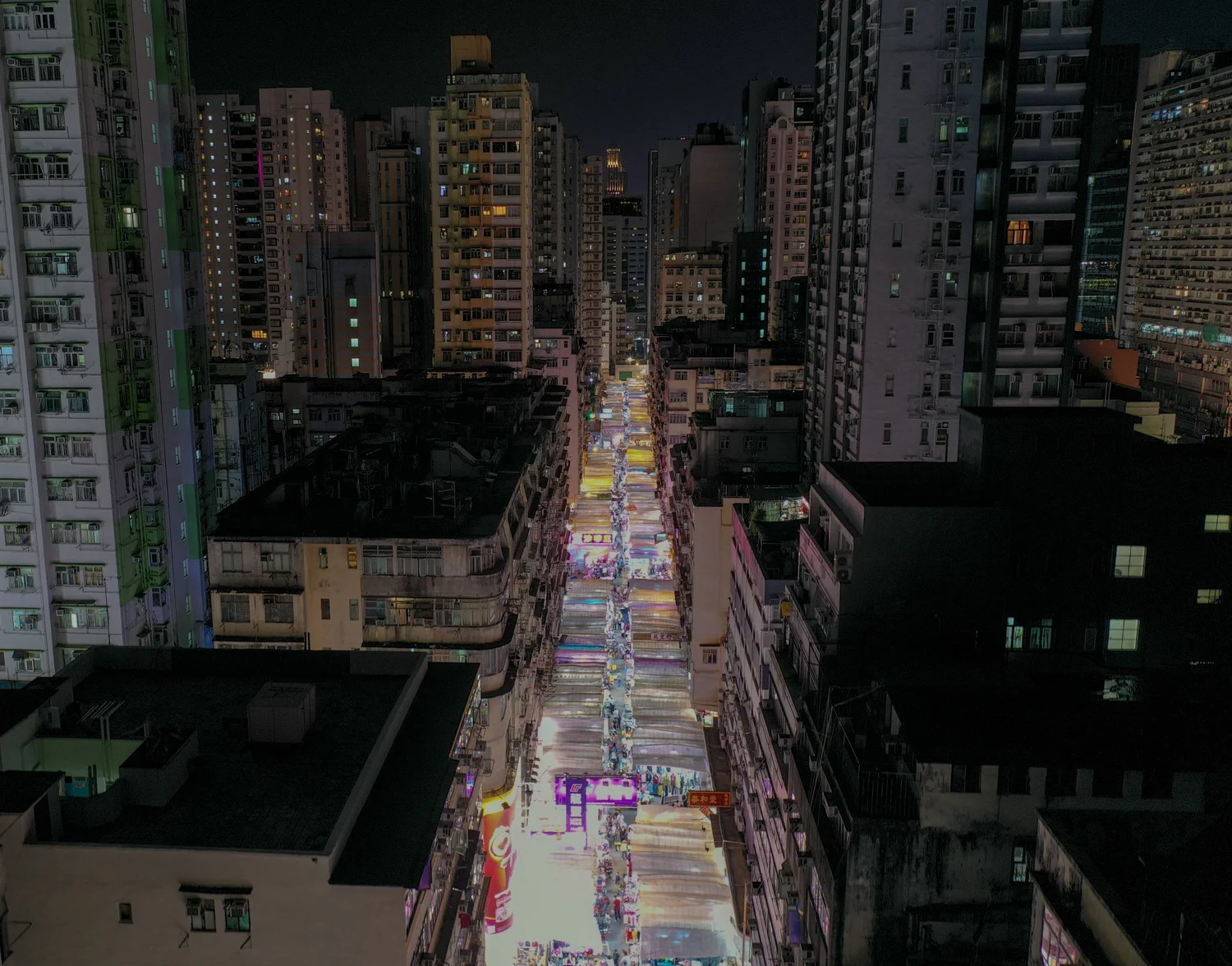
Mong Kok is Hong Kong at full volume: crowded pavements, shop signs stacked above the street and markets like the Ladies' Market on Tung Choi Street. Many of the city's famous old neon signs have been removed over the years, so the ones that remain are worth seeking out. Go after dark, when the signs and shop lights do the work for you, and use a fast shutter speed to freeze people moving through the colour.
Temple Street Night Market
Between Jordan and Yau Ma Tei, Temple Street comes alive in the evening with stalls, lights and food. It's busy and close-quarters, so keep your gear compact. A small camera or your phone is often better here than a big lens.
Choi Hung Estate
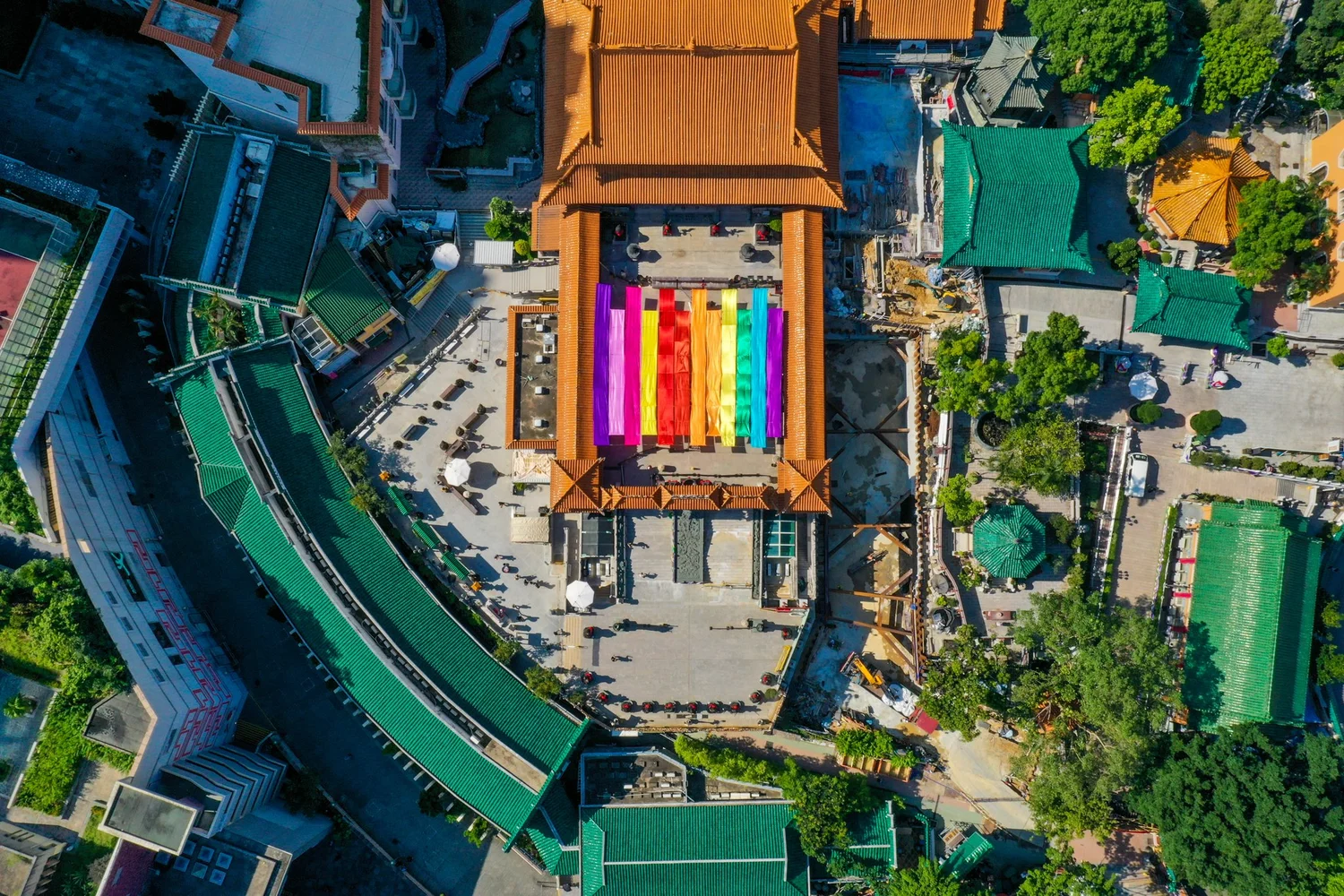
Choi Hung means "rainbow" in Cantonese, and this public housing estate in Kowloon is known for its rainbow-coloured blocks. The well-known basketball courts sit on the roof of the estate's car park.
- Getting there: MTR to Choi Hung station, then follow the signs into the estate.
- Please remember: it's a working estate and the courts are used by residents. Don't interrupt games, keep your visit short, and be careful about photographing people's homes.
A word on drones in Hong Kong
Aerial shots of Hong Kong are spectacular, but don't just launch a drone from the nearest viewpoint. Drone flying in Hong Kong is regulated by the Civil Aviation Department (CAD) under the Small Unmanned Aircraft Order, and some of the most famous places are off limits:
- Victoria Harbour and Victoria Peak are Restricted Flying Zones, along with the airport and other sites.
- Drones over 250 g must be registered, and the pilot must register too, before flying. Lighter drones still have to follow basic safety rules.
- Always check the official CAD Drone Map (on the eSUA portal) before every flight.
If you'd like to learn properly, our Drone for Beginners class covers setup, flight basics, Hong Kong's rules and aerial composition. We fly in open spaces, normally larger fields with a safety perimeter, and a rental drone is included if you need one. Check CAD's official visitor guidance for the latest rules.
How to photograph Hong Kong respectfully
Hong Kong is very used to cameras, but a few habits make a big difference:
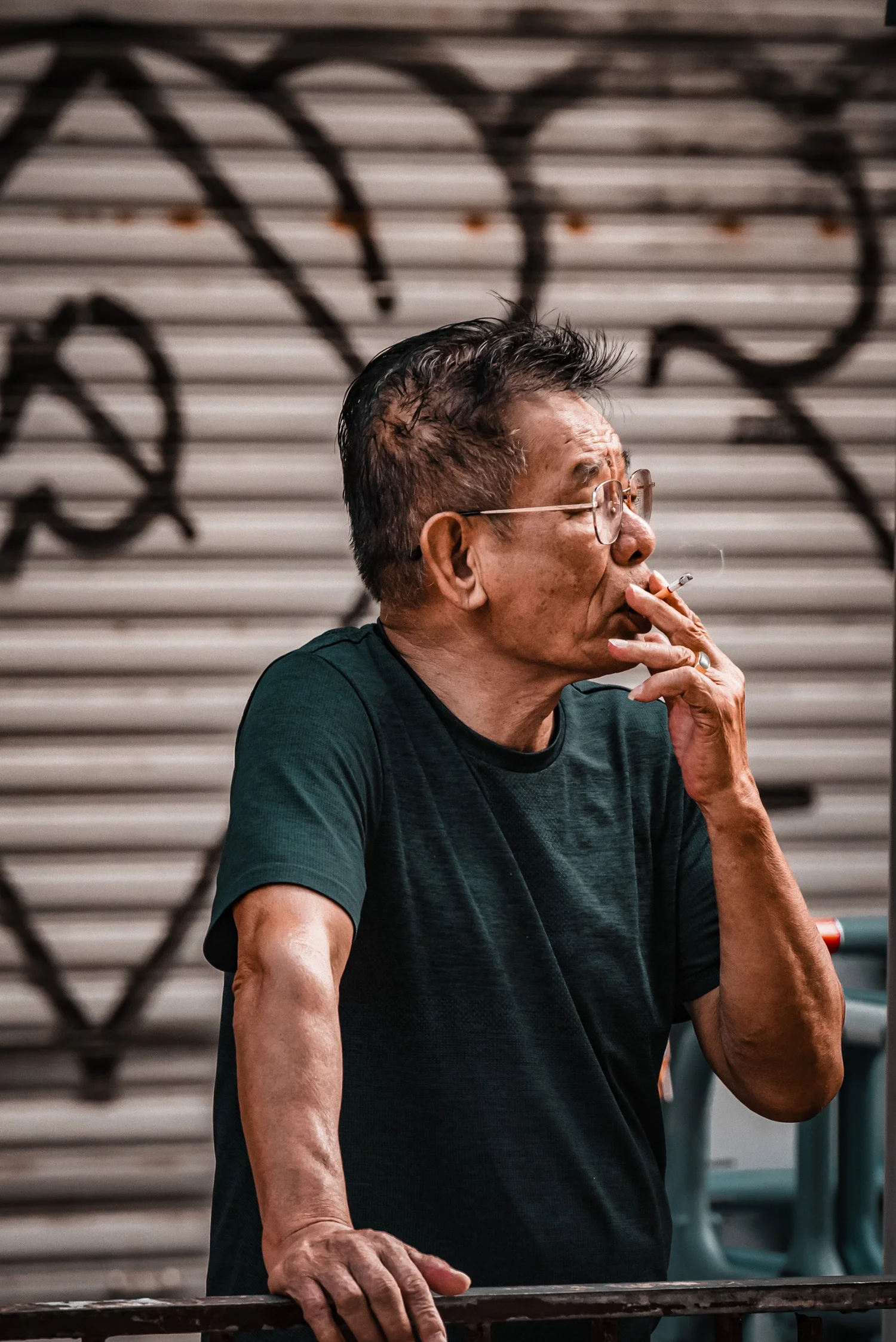
- Ask before close portraits. A smile and a gesture at your camera usually works. If someone says no, move on.
- Don't block the way. Pavements, stairs and market lanes are narrow. Step aside to shoot.
- Treat estates and temples as homes and places of worship, not film sets.
- Keep your kit light. You'll be walking a lot, often in heat and humidity.
Want to shoot these spots with a local?
Finding the spots is the easy part. Seeing them in a new way is where it gets fun. If you'd like help with both, we run small-group and private photography experiences across the city:
- Global Explorer: our 3-hour small-group street photography tour on Sunday mornings, for intermediate to advanced photographers.
- Beginner Photography Workshop: 3 hours of hands-on basics (composition, light and camera settings) while you explore the city.
- VIP Explorer: a private 1-on-1 photography journey with hotel pick-up, available any day of the week.
- Drone for Beginners: learn to fly and frame aerial shots safely.
Any type of digital camera is welcome on our photo tours, including your phone, and we teach in English, German, Portuguese and Italian. Compare all our tours or get in touch. We'd love to show you our city.