Hong Kong Night Photography Guide: Best Spots, Settings and an Evening Route
Hong Kong after dark is a photographer's playground. The towers light up, the harbour turns into a mirror, and Kowloon's streets glow with shop signs and tail lights. Most of it is free and an MTR ride apart.
We're UrbanHKG, a small team of Hong Kong photographers, and our main instructor, Carlos, has been shooting this city for more than 8 years. For when to shoot (blue hour and the seasons), see our guide to the best time to photograph Hong Kong. This post covers where to go, which settings to use, how to shoot safely and politely, and a route for one evening.
The best night photography spots in Hong Kong
Tsim Sha Tsui waterfront: the classic skyline
The view from Kowloon across Victoria Harbour to Hong Kong Island is the shot everyone wants. Between the Clock Tower, the Cultural Centre and the Avenue of Stars, the whole Island skyline is in front of you. There are no tripod restrictions on the TST waterfront, so this is the place to try a proper long exposure. Just set up against the railing and out of the walkway.
Getting there: MTR to Tsim Sha Tsui or East Tsim Sha Tsui station, or take the Star Ferry from Central.
West Kowloon Art Park: a wider, calmer skyline
West of Tsim Sha Tsui, the West Kowloon waterfront promenade and Art Park look across to Central from a different angle, with more sky, more water and fewer people than TST. It's great from sunset into blue hour.
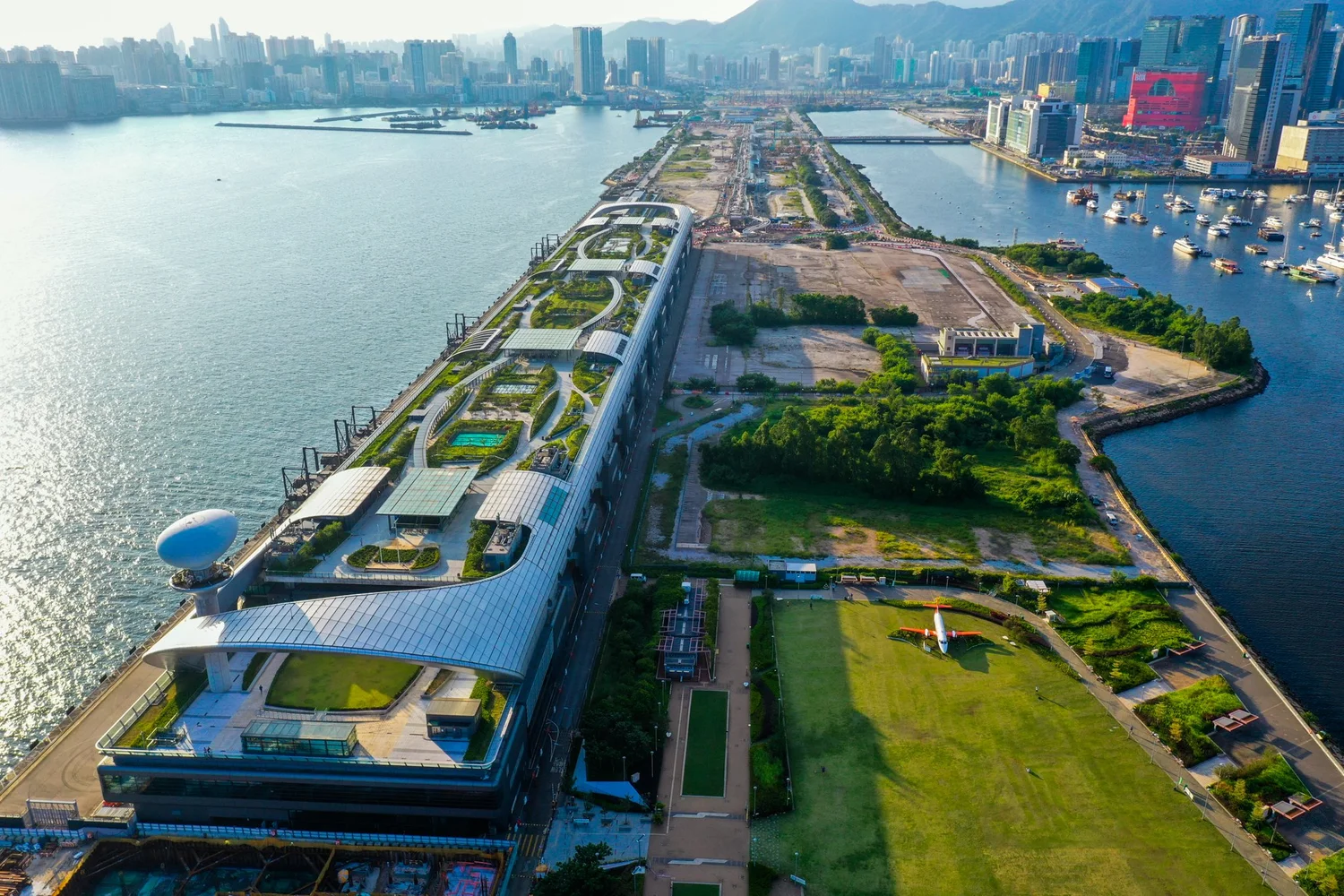
- Getting there: MTR Kowloon Station, then about a 10–15 minute walk. Austin Station is another option.
- Good to know: the Art Park and promenade are open 6am to 11pm daily, with occasional closures for events, so check the WestK website before you go.
Central at night: trams and light trails
After office hours, the trams on Des Voeux Road and the traffic below Central's footbridges turn into ribbons of light at a shutter speed of a second or more. The Central Harbourfront adds the Kowloon skyline and the lit-up Hong Kong Observation Wheel.
Mong Kok: neon, signs and crowds
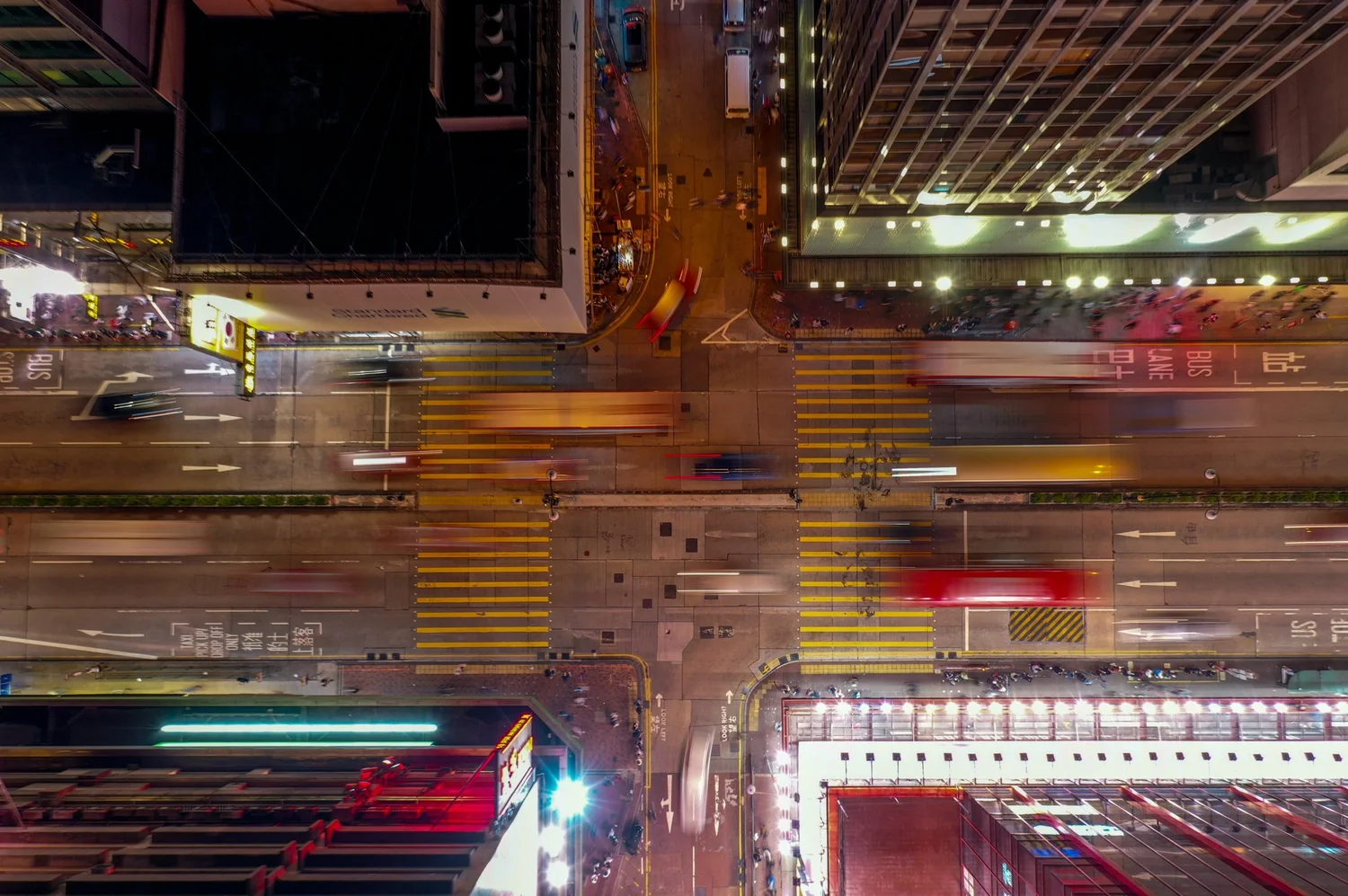
For pure street energy, the footbridge over Mong Kok Road looks straight down Tung Choi Street, a canyon of shop signs, buses and people. At street level, Sai Yeung Choi Street South and the Ladies' Market are full of colour. Most old neon has gone, but the density of signs hasn't.
Getting there: MTR to Mong Kok. Exit B3 puts you on Sai Yeung Choi Street, close to the footbridge.
Temple Street Night Market
Between Jordan and Yau Ma Tei, Temple Street is lit by stall lamps. It's tight and busy, so bring a phone or small camera. More in our best photography spots in Hong Kong guide.
Night photography settings that work
On a phone
- Use night mode and stay still. The phone takes several frames and blends them. Lean on a railing or wall, or rest the phone on something solid, and hold it until the capture finishes.
- Tap on the brightest buildings, then pull exposure down. Skylines are mostly dark sky and bright windows. Exposing for the lights keeps them from blowing out.
- Avoid digital zoom. Use your phone's real lenses (often 0.5x, 1x and a telephoto) and walk closer instead.
- Wipe the lens. Hong Kong's humidity and fingerprints cause most of the "glow" around lights in night phone shots.

On a camera
- Skyline on a tripod or railing: ISO 100–400, aperture around f/8, shutter from 2 to 15 seconds. Use the 2-second self-timer or a remote so you don't shake the camera.
- Light trails: the same base settings with 4–10 seconds, timed for when traffic or a tram is moving through.
- Handheld street scenes: a wide aperture (f/1.8–f/2.8), around 1/60 second, and ISO 1600–3200. Modern sensors handle it, and a sharp, grainy photo beats a blurry clean one.
- Shoot RAW so you can fix white balance later. Hong Kong mixes warm lamps and cool LEDs; around 3500–4000K is a good start.
- Bracket the skyline. A few exposures help you keep detail in both the bright towers and the dark harbour.
Safety and etiquette after dark
A few habits keep you and everyone around you happy:
- Keep walkways clear. Footbridges, the Mong Kok pavements and market lanes are narrow and crowded. Save tripods for open spaces like the TST waterfront and the West Kowloon promenade, and shoot handheld or against a railing elsewhere.
- Never step into the road or onto tram tracks for a better angle. Shoot from the pavement, a crossing island or a footbridge.
- Ask before close portraits, especially of stall holders who are working. A smile and a gesture at your camera usually does it.
- Watch the weather. If a Red or Black Rainstorm Warning or Typhoon Signal No. 8 is issued, call it a night. The Hong Kong Observatory app is the place to check.
- Mind your gear in crowds. Wear your bag in front at the markets and use a camera strap.
- Plan your ride home. The MTR runs until around 1am on most lines, but last trains differ by station, so check the MTR app before you head out.
A sample evening route
A route we like for a first night out. Shift the start with the season: sunset is around 5:45pm in late October and just after 7pm in early July.
| Time | Where | What to shoot |
|---|---|---|
| 45 min before sunset | West Kowloon Art Park | Sunset over the harbour, Central's towers catching the light |
| Sunset to blue hour | West Kowloon promenade, then walk to TST | Blue-hour skyline, reflections on the water |
| After dark | Tsim Sha Tsui waterfront and Avenue of Stars | Tripod long exposures of the Island skyline, ferries crossing |
| Later | MTR Tsim Sha Tsui to Mong Kok (3 stops) | Neon and crowds from the Mong Kok Road footbridge |
| Last stop | Walk south to Temple Street | Stalls, lamps and street food, handheld |
Allow about four hours. Temple Street is also easy to reach from Jordan station.
About A Symphony of Lights: the harbour light-and-music show still runs nightly at 8pm, but the government has announced it will end in the fourth quarter of 2026, with no final date announced yet. Check the Tourism Commission website before you plan around it. The lit-up skyline is there every night either way.
Shoot Hong Kong at night with us
Night shooting is easier with someone showing you the settings on the spot:
- VIP Explorer: our private 4-hour photography tour runs any day of the week, so you can plan it around golden hour and blue hour. Hotel pick-up is included, and a partner can join for HK$1,000.
- Beginner Photography Workshop: learn exposure, ISO and shutter speed properly, so night shooting stops being guesswork. HK$800.
- Global Explorer: our small-group street photography tour, Sundays 8–11am, max 4 people, HK$650.
Any digital camera is welcome, including phones. We teach in English, German, Portuguese and Italian, and a Cantonese translator can be arranged on request. If the weather turns bad, you can cancel for free. Questions? Get in touch or WhatsApp us on +852 9459 5079.
Frequently asked questions
Can I photograph Hong Kong at night with just a phone? Yes. Use night mode, brace the phone against a railing and expose for the brightest lights. Most of the spots in this guide work well with a phone.
Do I need a tripod for night photography in Hong Kong? Not always. For skyline long exposures it helps a lot, and there are no tripod restrictions on the Tsim Sha Tsui waterfront. In crowded streets and on footbridges, shoot handheld or brace against a railing instead.
Where is the best place to photograph the Hong Kong skyline at night? The Tsim Sha Tsui waterfront is the classic view of Hong Kong Island. For a calmer, wider angle, try the West Kowloon Art Park promenade.
Is A Symphony of Lights still running? It still runs nightly at 8pm, but it's due to end in the fourth quarter of 2026. Check the Tourism Commission website for the latest before your visit.